 Proudly Canadian
Exploring New Brunswick’s Bay of Fundy Coast
Twice a day the world's highest tides remake New Brunswick's Fundy coast: walk the ocean floor at Hopewell Rocks in the morning, kayak over the same spot by afternoon, and end the day with lobster in a fishing village.
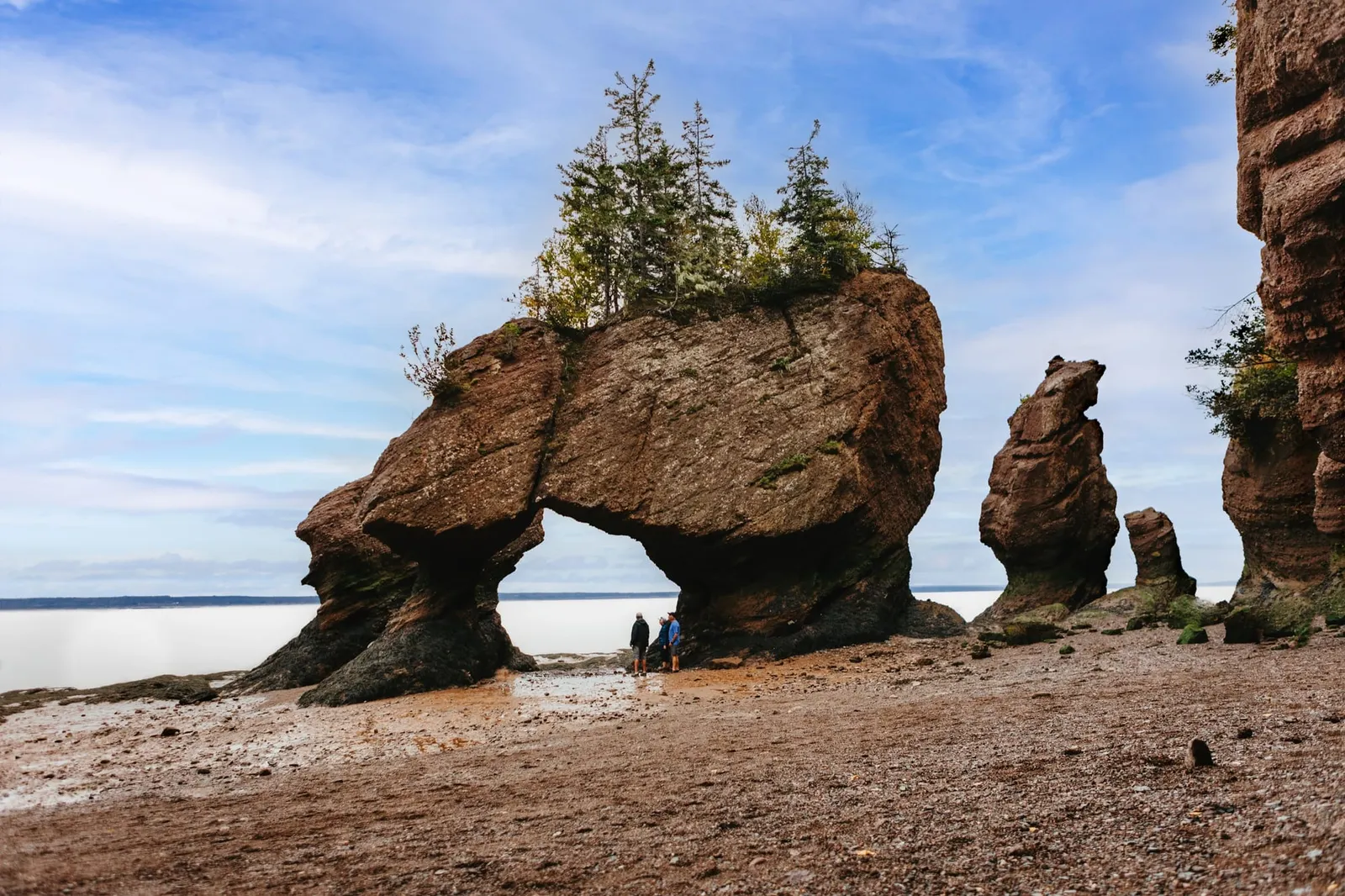
The Bay of Fundy is a place where the tide chart matters. At low tide, you can walk across stretches of ocean floor that will be underwater hours later. By high tide, kayaks glide around the same rock formations you were just standing beside. This constant change makes New Brunswick’s Fundy coast memorable.
Known for the highest tides in the world, water levels can rise as much as 52.5 feet with billions of tonnes of seawater moving in and out twice daily. Yet the appeal goes beyond numbers. This coastline is shaped by water, rock, forest, and time—a place where dramatic natural sights sit close to historic cities, fishing villages, and some of the best seafood in the Maritimes.
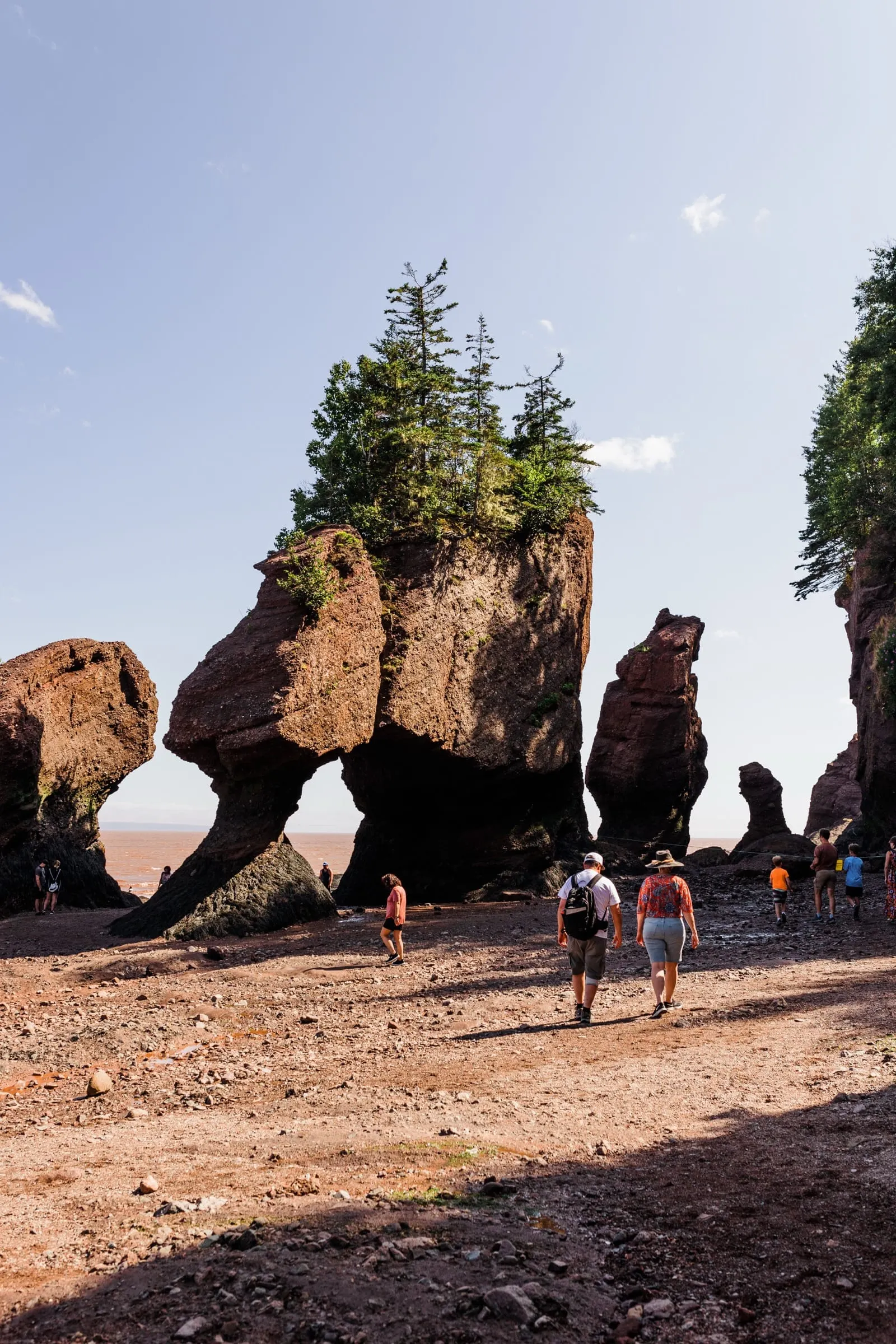
Hopewell Rocks Provincial Park is the ideal starting point. At low tide, you can walk on the ocean floor between famous flowerpot-shaped sea stacks carved by tidal forces. Standing at their base, looking up at the narrow tops where trees and greenery cling to the rock, the scale is easier to understand. A few hours later, the same area is covered by water, and guided kayaking tours offer a completely different view of the shoreline, allowing you to paddle around the very monoliths you were just standing beside.
Tides also impact urban settings. In Saint John, the Reversing Falls Rapids show the Bay of Fundy pushing against the Saint John River, temporarily forcing its flow to reverse. Timing is key, as the experience changes with the tide. In Moncton, Tidal Bore Park showcases a wave rolling up the Petitcodiac River. This wave, typically 1.5 to 3 feet high, is powerful enough that adventurous locals and visitors sometimes surf it for miles downriver.
Saint John is worth more than a quick stop. Set along the bay, the city blends maritime history with a lively downtown. Its historic streets feature Victorian architecture, independent shops, and galleries perfect for exploring on foot. The Saint John City Market is a good place to get a feel for the region through local produce, baked goods, seafood, crafts, and casual conversations with vendors who have been part of the community for generations.
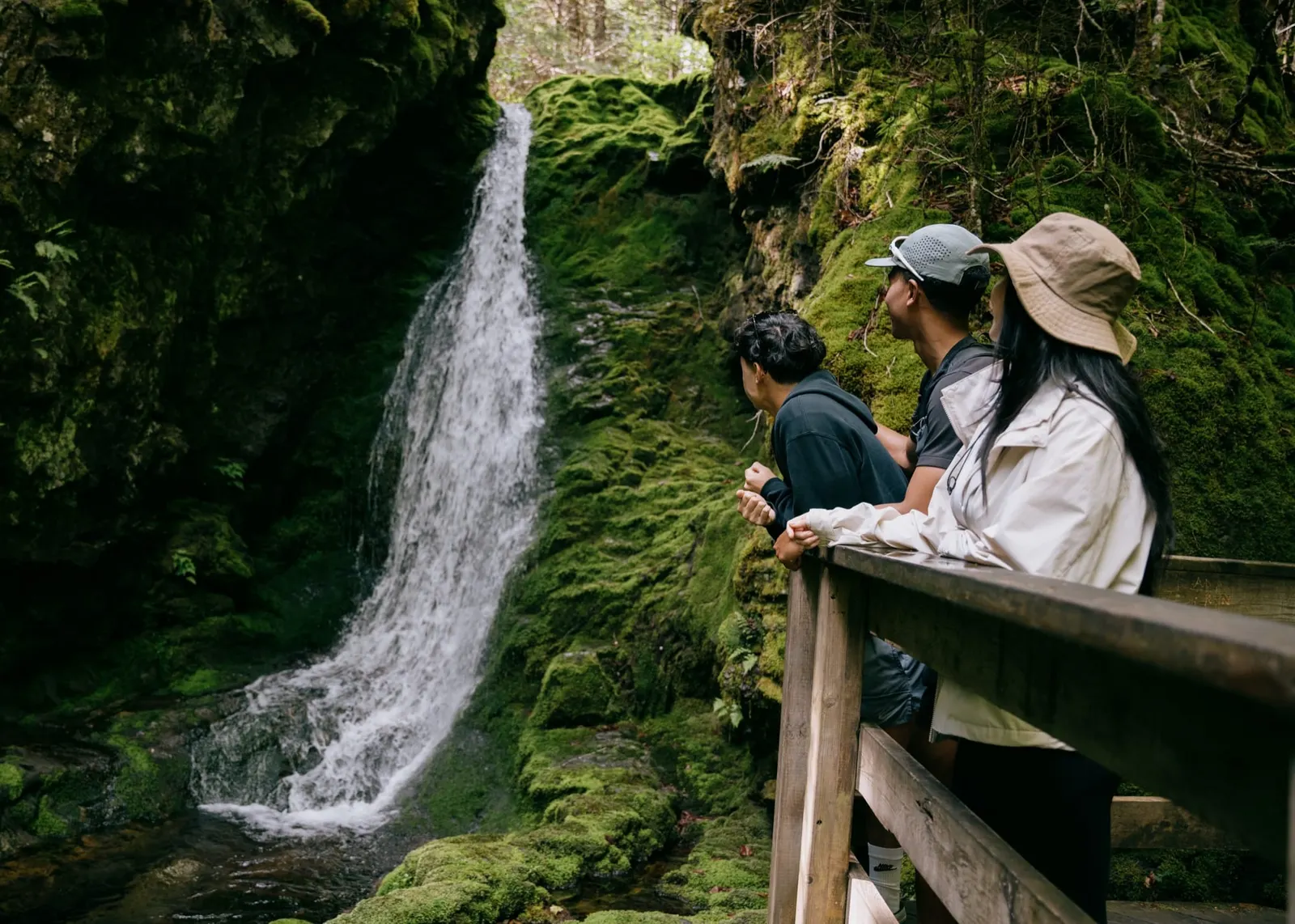
Beyond the city, the coast opens into the wilderness of Fundy National Park. Here, the Acadian forest meets the bay, offering wooded trails, waterfalls, and coastal views. With over 25 trails, the park caters to all hikers. Dickson Falls is a favorite for its short loop, boardwalks, and waterfall views. Trails like Laverty Falls and Caribou Plains offer a deeper look at the park’s landscape, from forests to wetlands.
The park is also a place to slow down. Visitors can camp, bike, paddle, or swim in freshwater lakes. The nearby village of Alma is a natural base for fresh seafood—a coastal community where fishing boats, tide schedules, and plates of lobster feel deeply connected.
The Fundy Trail Provincial Park offers one of the region’s most scenic drives along a rugged shoreline with lookouts, beaches, and waterfalls. Along the way, interpretive stops share stories of the area’s logging and shipbuilding history, adding historical depth to the stunning coastal lookouts and waterfalls that define the route.
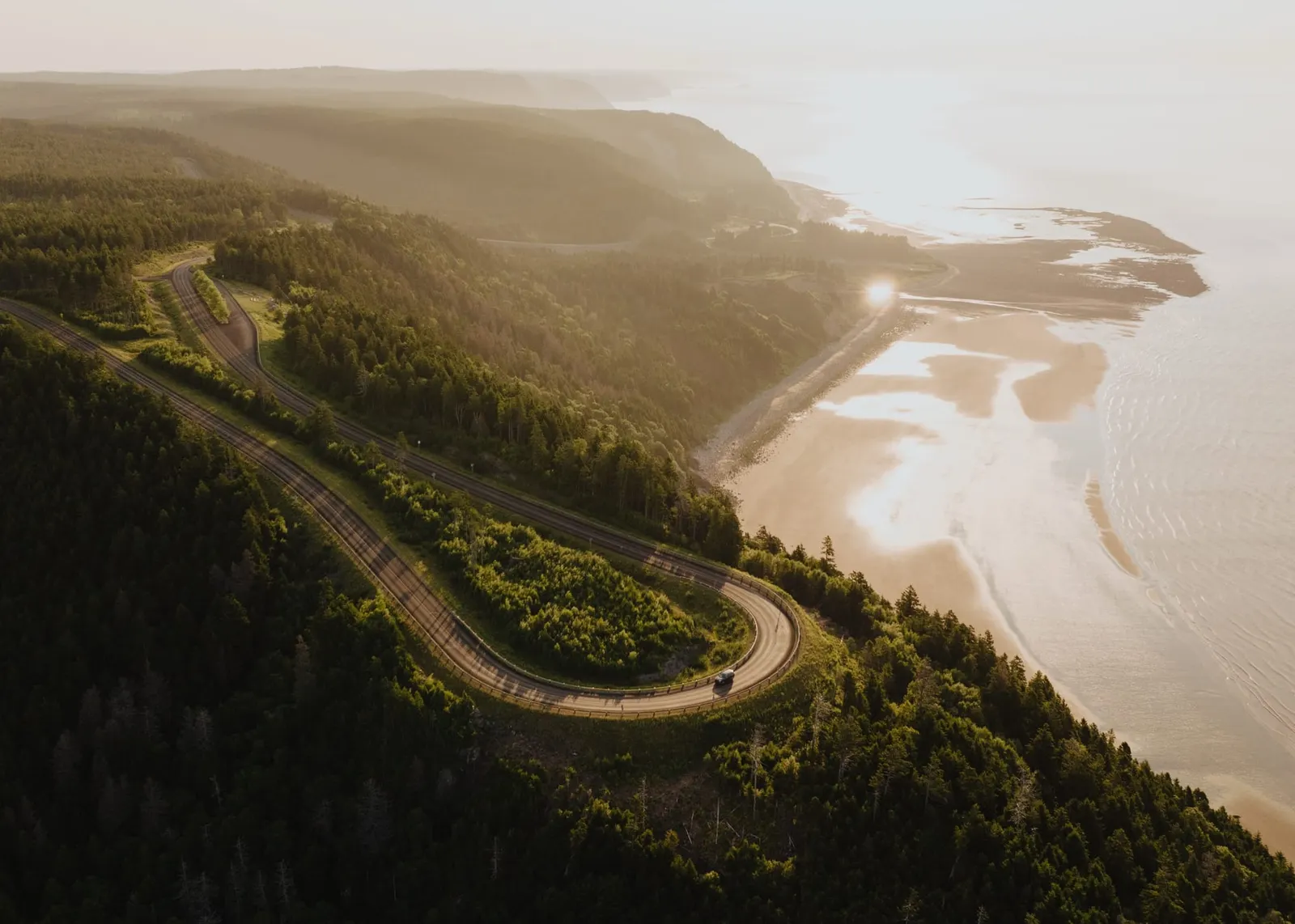
The park is also part of the larger Stonehammer UNESCO Global Geopark, which spans a wide area of southern New Brunswick. For travelers interested in geology, this adds another layer to the trip. The rocks along this coast help tell a story that stretches back hundreds of millions of years, and in some places even further. Visitors can see evidence of ancient landscapes, shifting continents, erosion, and the ongoing force of the tides that continue to shape the region today.
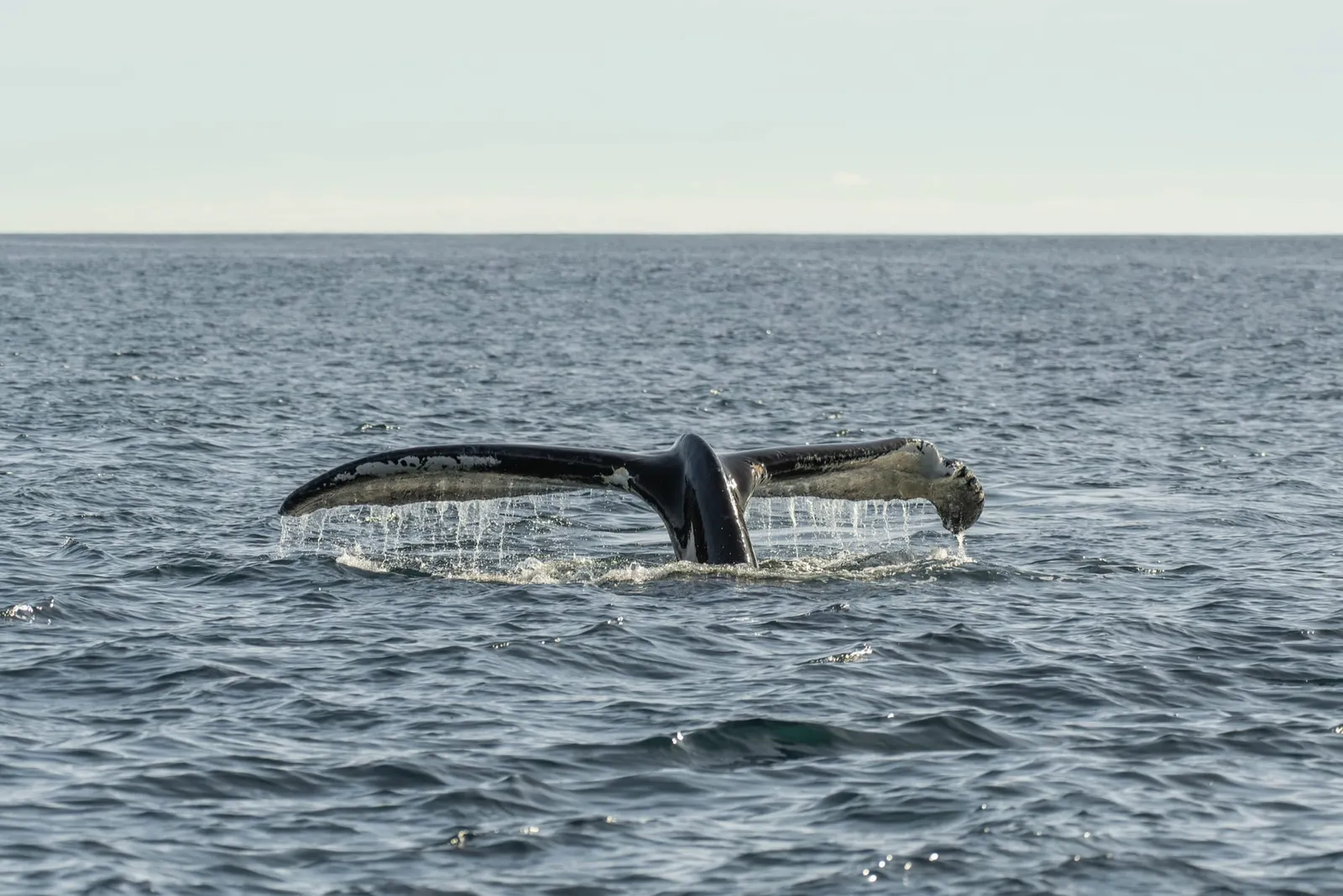
Between Saint John and St. Andrews, a ferry from Blacks Harbour leads to Grand Manan Island. A premier location for whale watching and birdwatching, the island sits on a major flyway with over 240 bird species. The surrounding waters are equally rich; cold-water upwellings attract diverse marine life, including puffins and various whales. With its rugged cliffs and quiet fishing villages, Grand Manan offers a peaceful retreat and a chance to experience the bay’s wilder, more isolated character. The island’s lighthouses and coastal trails provide endless opportunities for photography and quiet reflection amidst the sound of the crashing waves.
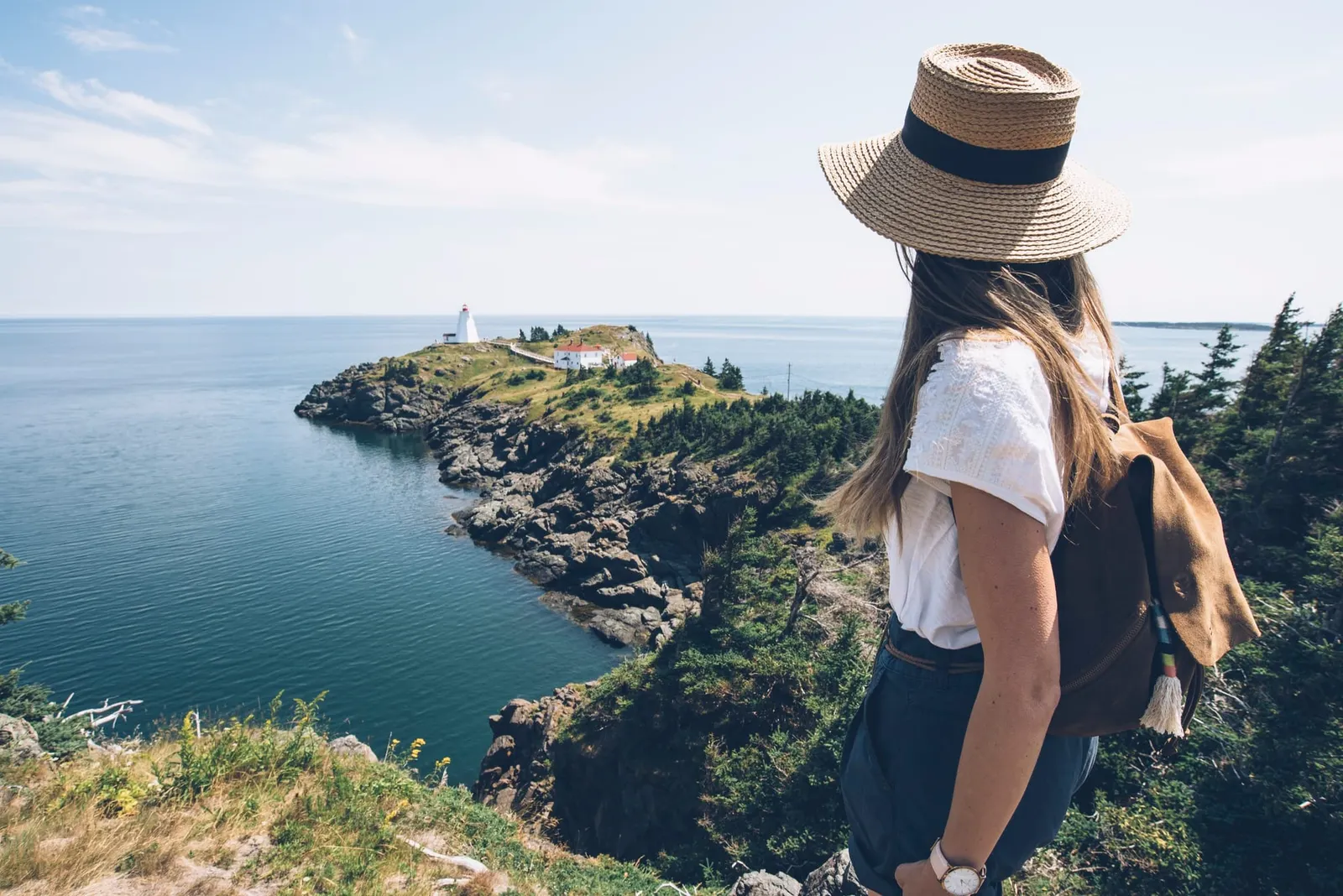
Farther along the coast, St. Andrews-by-the-Sea offers a different pace. This historic resort town is known for its architecture, gardens, and easygoing seaside atmosphere. It is also one of the region’s best spots for whale watching, with tours spotting humpback, minke, finback, and rare North Atlantic right whales. St. Andrews is home to Kingsbrae Garden, featuring themed gardens and walking paths. Perched above the town is the historic Algonquin Resort, an architectural icon that has defined seaside hospitality in St. Andrews since 1889. With its mock-Tudor facade and sprawling grounds, the resort is one of the most photographed buildings in New Brunswick, offering a blend of old-world charm and modern luxury. Whether you are enjoying a meal on the veranda or relaxing by the fire, the resort provides a sense of nostalgia and elegance that complements the timeless beauty of the surrounding bay.
Food is a big part of travelling through the Bay of Fundy region. Seafood is the obvious draw, and for good reason. Lobster, scallops, haddock, clams, and other local catches appear on menus throughout the coast, from casual wharf side spots to more polished restaurants. But the region’s food scene also includes local produce, baked goods, cheeses, craft drinks, and farmers’ markets that reflect both its agricultural and maritime roots.
The best time to visit depends on the kind of trip you want. Summer and early fall are especially popular, with warmer weather, fully operational attractions, hiking, kayaking, and whale watching season generally running from June to October. That said, the tides are not seasonal — they are part of the landscape year-round. Even a short visit can give you a sense of how dramatically the coast changes within a single day.
A trip to the Bay of Fundy is not just about seeing one famous natural wonder. It is about watching a place shift in real time. Ocean floor becomes seabed again. Rivers change direction. Sea stacks disappear beneath rising water. Forest trails lead to waterfalls, coastal roads open to sweeping views, and small towns carry the character of a region shaped by the sea. For travelers looking for a mix of nature, history, food, and coastal scenery, New Brunswick’s Bay of Fundy region offers a trip that feels both easy to plan and hard to forget.
Find out more by visiting www.sensesnb.ca. As featured on the cover of The Canada Magazine, August 2026 Issue.
Copy
Published Online

Support Tourism New Brunswick
Plan a Fundy trip, or send this on. Both are real support.
Follow Tourism New Brunswick
- Websitesensesnb.ca
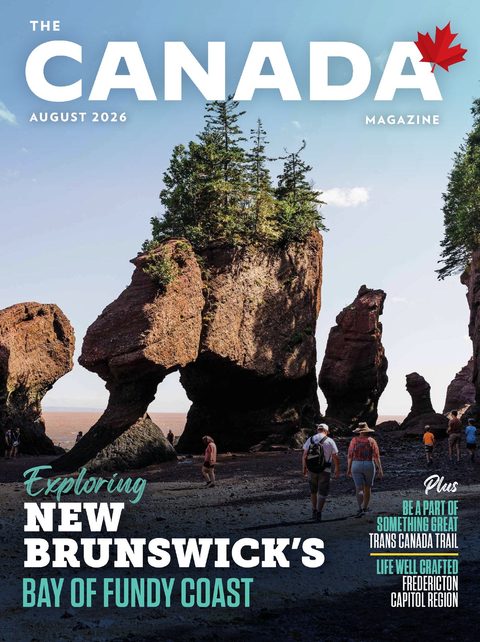
As featured on the cover of The Canada Magazine, August 2026 issue.
See the August issue content